Social dance
Dances for participation, not performance, across cultures.

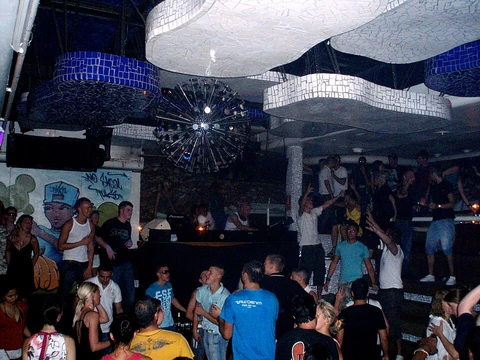
Social dances are dances that have social functions and context, intended for participation rather than performance. They are often danced merely to socialize and for entertainment, though they may have ceremonial, competitive, and erotic functions. Many social dances of European origin are in recent centuries partner dances, but elsewhere there may instead be circle dances or line dances.
- field
- Dance
- known_for
- Participation-based dances with social, ceremonial, and entertainment functions
Lore & Background
In the early 20th century United States, Americans began pairing Victorian dances such as the Two-Step with Ragtime music, alongside the African American Cakewalk and animal dances like the Turkey Trot. Among the most popular social dances were the One-Step, Two-Step, and Fox Trot, each widely enjoyed; the One-Step, where couples took one step on each beat, was one of several leading dances rather than the single most popular. The phonograph record marked a shift toward dancing to recorded music. Swing dance in the 1930s grew in popularity, with forms like Lindy Hop and West Coast Swing surviving to today. Rock 'n' roll in the 1950s brought rebelliousness, especially among teenagers, with couples dancing as individuals—a trend that had earlier precedents in dances like the Charleston and Lindy Hop. The mid-20th century saw strong influence from Latin American dance, particularly from Cuba, where Spanish colonial ballroom traditions blended with Indigenous Taíno forms and the music and dance of enslaved Africans. The 1950s brought dance crazes such as the mambo and cha-cha-chá, popularized through nightclubs, television, and touring orchestras. By the late 1960s and early 1970s, Cuban and Puerto Rican influences converged into salsa, a hybrid genre that became a fixture of social life in urban centers. Salsa also gave rise to salsa congresses, multi-day festivals featuring workshops, performances, competitions, and social dancing, which have since expanded to include bachata, Kizomba, and Zouk.
Reader's Guide
Social dance matters because it reflects and shapes social values across eras and cultures. From the formal court dances of the Baroque Era, which displayed social hierarchy, to the rebellious rock 'n' roll dances of the 1950s, social dance has mirrored societal changes. The waltz introduced closer partner dancing and equality between partners, while the Polka pushed boundaries of acceptable closeness. In the United States, the shift from Victorian dances to ragtime and swing marked a move toward more accessible and youthful forms. The introduction of recorded music via phonographs, radio, and jukeboxes democratized dance, allowing broader participation. Latin American influences, particularly from Cuba, brought partnered social dances like mambo, cha-cha-chá, and salsa into mainstream American culture, blending Spanish, Indigenous, and African traditions. Salsa congresses have since become global events, expanding to include other styles. Social dance remains a participatory activity that evolves with society, serving as a barometer of cultural change and a means of social connection.
Did You Know?
- Written records of dances exist from ancient Greek, Roman, medieval, and Indian sources, long before the 15th century.
- In the traditional ballroom waltz, the male partner led.
- The phonograph record marked a shift toward dancing to recorded music.
- Salsa congresses originally focused on salsa but have since expanded to include bachata, Kizomba, and Zouk.
Purpose and Social Function
Social dance is fundamentally defined by its role in bringing people together rather than entertaining an audience. Unlike theatrical or competitive performance, these dances are designed for active participation, serving purposes that range from casual socializing and entertainment to ceremonial, competitive, and even erotic contexts. The forms vary dramatically across cultures: in Europe, the dominant tradition over recent centuries has been the partner dance, closely associated with ballroom traditions. In many other parts of the world, the social dance takes the shape of circle dances or line dances, where groups move collectively rather than in pairs. This distinction reveals how deeply dance is woven into the social fabric of a community, functioning as a shared activity that reinforces bonds, marks occasions, and provides collective enjoyment. The emphasis on participation over spectacle means that social dance is, at its core, a democratic art form accessible to anyone willing to step onto the floor.
Courtly Origins and the Written Record
The earliest evidence of social dance in Europe comes from 14th-century manuscripts that preserved music for dances like the ballo, carol, stampita, saltarello, trotto, and roto, though without any choreographic notation. It was not until the 15th century that written descriptions of actual dance steps appeared. A Brussels manuscript documents the Burgundian court's basse dance, a group performance in triple time that spread across the continent, while Italian courts developed the balli, elaborate choreographed sequences recorded in instruction books authored by the dance masters themselves. Lower-class dances remained undocumented until the Late Renaissance. By the late 16th century, courtiers felt constant pressure to demonstrate social grace through their dancing, and styles like the pavane and the Canary dance became markers of refinement. Thoinot Arbeau's Orchésographie captured both aristocratic forms like the basse danse and la volta alongside peasant branles, illustrating how rural communities continually fed fresh material into courtly repertoires as older styles lost their novelty.
The Waltz and the Revolution of Equality
When the waltz reached Britain near the close of the Napoleonic Wars, it introduced a radical shift in how partners related on the dance floor. For the first time, couples moved in close physical proximity, and crucially, neither partner assumed the role of leader. Both individuals danced as equals, a concept genuinely novel and somewhat scandalous in that social climate. The Polka, emerging around the same period, carried a similar charge of closeness that many found provocative. These developments followed a broader cultural shift: the French Revolution had already begun eroding the rigid formality of Baroque-era court balls, where a branle opened with couples arranged strictly by social rank and the Menuet and Gavotte dominated. As Richard Powers observed, the dances of this transitional period were fresh, inventive, youthful, and somewhat daring, mirroring a society redefining its own social codes.
American Transformation and the Latin Influence
By the turn of the 20th century, Americans had grown weary of the formal court dances of earlier generations. They paired Victorian steps like the Two-Step with Ragtime rhythms, while the African American Cakewalk and the Turkey Trot added new energy. The One-Step, in which couples took one step per beat, became the era's most accessible social dance. The phonograph record transformed the experience, shifting dancing from live orchestras to recorded music played through radio, jukeboxes, and sock hops. The 1930s saw swing dance flourish as the Lindy Hop and West Coast Swing, styles that endure today. Rock 'n' roll in the 1950s injected rebellion, with teenagers rejecting their parents' steps and couples dancing as independent individuals rather than leader-and-follower pairs. Simultaneously, Cuban traditions—born from the blending of Spanish colonial ballroom, Taíno Indigenous forms, and African dance—spread through Latino communities in New York, Miami, and Los Angeles. The mambo and cha-cha-chá became nationwide crazes in the 1950s, fueled by bandleaders like Pérez Prado, before converging in the late 1960s into salsa, a unified genre championed by Johnny Pacheco of Fania Records. Salsa congresses, multi-day festivals of workshops, competitions, and social dancing, eventually expanded to embrace bachata, Kizomba, and Zouk.
Frequently Asked Questions
What is Social dance?
Social dance refers to dance forms designed for active participation by everyday people rather than for watching a performer. They exist primarily within social settings where the act of dancing together is the main purpose.
How does Social dance differ from performance dance?
The core distinction is intent: social dances are meant for the dancers themselves to join in, while performance dances are created to be observed by an audience. A social dance's value lies in the shared experience of the participants rather than in showcasing skill to onlookers.
What functions do Social dances serve?
Beyond simple entertainment and socializing, social dances can carry ceremonial significance, serve competitive purposes, and even fulfill erotic or courtship roles. The specific function often depends on the culture and context in which the dance is practiced.
What forms do Social dances take around the world?
In European traditions that emerged in recent centuries, partner dancing became the dominant social format. In many other cultures, circle dances and line dances are the preferred social structures, reflecting different values about community and participation.
Why is Social dance important in the broader dance field?
Social dance demonstrates that movement and rhythm are not solely artistic expressions but also fundamental tools for building community and marking life events. It keeps dance accessible to non-professionals and ensures that dancing remains a lived, everyday practice rather than only a spectator activity.
More in Dance Forms 1-24
Elsewhere in the Dance Forms universe
Spotted an error? Know more?
This is a living reference — every entry is fact-audited, and reader corrections feed straight into our audit queue. Suggest an edit · See this site's audit record