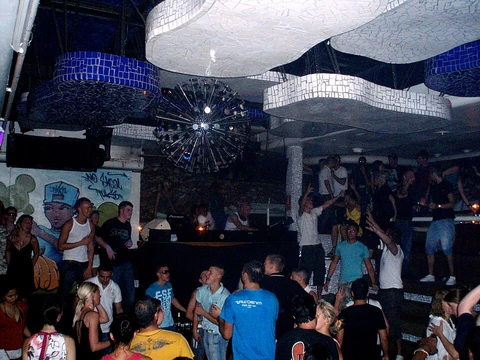
Street dance
Umbrella term for social dance styles born in urban spaces.

Street dance is an umbrella term for a large number of social dance styles, including breakdancing, popping, locking, house dance, waacking, voguing, and hip-hop dance. These vernacular dances are improvisational and social in nature, created organically from a culture, a moment in time, and a way of life, influenced by natural social interaction in an urban context.
- field
- Social dance styles
- known_for
- Vernacular dance in urban contexts, created outside dance studios
- origin
- America is the birthplace of most street styles; breakdance originated in the Bronx, Lite Feet in Harlem, popping and locking in California; clogging evolved in Northern England
Lore & Background
Street dance evolved during the 1970s outside dance studios in any available open space, including streets, dance parties, block parties, parks, school yards, raves, and nightclubs. This was partly because African Americans who created the style were generally not accepted into dance studios because of their race. A significant feature of street dance is that it was historically a dance of young people offering a sense of freedom and giving a 'voice' to unrepresented communities.
Reader's Guide
Street dance matters as a cultural expression that emerged from marginalized communities, particularly African Americans, who were excluded from formal dance studios due to racial discrimination. It provided a sense of freedom and a voice for unrepresented groups, evolving organically in public spaces such as streets, parks, and nightclubs. The styles—breakdancing, popping, locking, house dance, waacking, voguing, and hip-hop dance—each carry distinct regional origins, with breakdance from the Bronx, Lite Feet from Harlem, and popping and locking from 1970s California. Clogging, an early form from mid-19th-century Northern England, also falls under this umbrella. Street dance remains a vernacular, improvisational art form that encourages interaction between dancers and spectators, reflecting the social and cultural dynamics of its time and place.
Did You Know?
- Street dance evolved during the 1970s outside dance studios in streets, parks, and nightclubs.
- African Americans who created street dance were generally not accepted into dance studios because of their race.
- Breakdance originated in the Bronx, while popping and locking developed in California during the 1970s funk era.
- Clogging, which evolved in the streets and factories of Northern England in the mid-19th century, is an early form of street dance.
Defining the Form
Street dance functions as a broad umbrella encompassing a wide array of social dance styles, from breakdancing and popping to locking, house dance, waacking, voguing, and hip-hop dance. Rather than a single codified form, it represents a family of movements that share a common philosophical DNA. At its core, street dance is a vernacular practice rooted in urban environments, where steps and foundations emerge organically from the lived experience of a community, a particular era, or a specific way of life. What unites these diverse styles is their inherently social character. They are improvisational by design, inviting dancers to interact with one another and with onlookers rather than performing in isolation. This emphasis on contact and exchange with spectators sets street dance apart from purely theatrical or studio-bound traditions. The movements are not imposed from above by choreographers but grow from the ground up, shaped by natural social interaction and the collective energy of the people present in the space.
Roots in Exclusion and Freedom
The story of street dance is inseparable from the story of who was shut out of formal institutions. During the 1970s, the styles that would come to define the genre developed in whatever open space was available—streets, block parties, parks, schoolyards, raves, and nightclubs—largely because the African American communities who created them were routinely denied entry into dance studios on the basis of their race. This exclusion became a creative catalyst rather than a limitation. The resulting art form carried a powerful sense of liberation, particularly for young people who found in these movements a voice that mainstream culture had not offered them. Street dance became a medium through which unrepresented communities could assert their presence, express their identity, and claim public space. The fact that it flourished precisely in the margins of the city, in the gaps between formal institutions, is not an accident of circumstance but a defining feature of its character and spirit.
A Mosaic of Origins
Because street dance encompasses so many distinct styles, no single neighborhood or city can claim sole authorship of the genre. Nevertheless, the United States serves as the birthplace of the majority of recognized street styles, with specific regions giving rise to specific movements. In New York City, breakdance took shape in the Bronx while Lite Feet emerged in Harlem, each reflecting the particular social fabric of its neighborhood. Across the country, the funk era of 1970s California became the incubator for both popping and locking, styles whose sharp, rhythmic isolations mirror the musical textures of that period. The roots of street dance, however, extend further back in time and beyond American shores. Clogging, a percussive footwork tradition that developed in the streets and factories of Northern England during the mid-nineteenth century, stands as one of the earliest identifiable forms of what we now classify as street dance. This geographic and temporal spread underscores that street dance is not a monolith but a living, multi-origin tradition.
The Social Engine
What distinguishes street dance from many other dance traditions is its insistence on community as both audience and participant. These are not performances delivered from a stage to a passive crowd; they are conversations conducted in movement, where the boundary between dancer and spectator is deliberately blurred. The improvisational nature of the forms means that each gathering produces something unique, shaped by the energy of the people present, the music playing, and the specific social dynamics of the moment. Dancers are encouraged to make contact with onlookers, to invite participation, to read the room and respond in real time. This social architecture means that street dance functions as a form of vernacular culture tied to the specific geographical area from which it springs. The steps and foundations are not abstract technical exercises but embodied expressions of a community's way of life, its rhythms, and its collective memory. In this sense, every street dance style carries within its movements a record of the people and place that gave it birth.
Frequently Asked Questions
What is Street dance?
Street dance is an umbrella term covering a wide family of social, improvisational dance styles that grew out of urban community life rather than formal training rooms. It includes forms like breakdancing, popping, locking, house dance, waacking, voguing, and hip-hop dance.
Where did Street dance originate?
America is widely recognized as the birthplace of most street dance styles, with breakdance emerging in the Bronx, Lite Feet in Harlem, and popping and locking developing in California. Clogging, an older related form, traces back to Northern England.
How is Street dance different from studio or concert dance?
Street dance is created organically through social interaction in urban settings, making it inherently improvisational and community-driven. It exists outside the walls of a dance studio, shaped by a specific culture, moment, and way of life rather than a prescribed syllabus.
What makes Street dance 'vernacular'?
The term vernacular here means these dances function as a living, everyday language of movement spoken within a community. They evolve naturally from social gatherings and street culture rather than being composed by a single choreographer for performance.
Why is Street dance important to dance culture?
Street dance demonstrates that powerful, expressive movement traditions can emerge entirely from grassroots social interaction in cities. It preserves the creative voices of urban communities and continues to influence mainstream dance, music, and fashion worldwide.
More in Dance Forms 1-24
Elsewhere in the Dance Forms universe
Spotted an error? Know more?
This is a living reference — every entry is fact-audited, and reader corrections feed straight into our audit queue. Suggest an edit · See this site's audit record