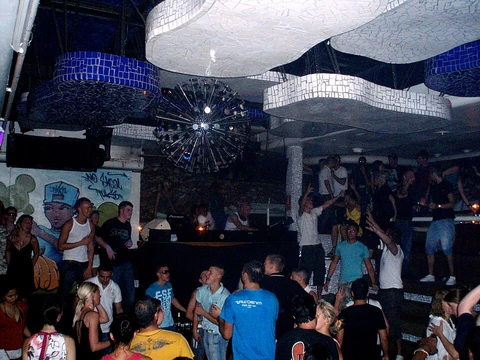
Latin dance
A dance category blending Indigenous, European, and African roots.

Latin dance is a general label and a term in partner dance competition jargon. It refers to types of ballroom dance and folk dance that mainly originated in Latin America, though a few styles originated elsewhere. The category draws from Indigenous American, European, and African influences, with earliest native roots from the Aztecs, Guarani, Aymara, Incas, and Tehuelches among others.
- field
- Partner dance competition and social dance
- known_for
- International dancesport competitions (Cha-cha-cha, Rumba, Samba, Paso Doble, Jive) and social Latin dances (salsa, mambo, merengue, bachata, bomba, plena)
- origins
- Latin America, with influences from Indigenous American, European, and African traditions
- influences
- Aztec, Guarani, Aymara, Inca, Tehuelche, European settlers, African slaves
Lore & Background
Latin dance draws from Indigenous American, European, and African influences. The earliest native roots came from the Aztecs, Guarani, Aymara, Incas, and Tehuelches. When sixteenth-century seagoing explorers returned to Portugal and Spain, they brought tales of native peoples. According to Rachel Hanson, no one knows how long these dance traditions were established, but they were already being developed and ritualized when observed by Europeans. Indigenous dance often told stories of everyday activities such as hunting, agriculture, or astronomy. When European settlers and conquistadors began to colonize South America in the early sixteenth century, they reinvented local dance traditions but kept native styles. Catholic settlers merged native culture with their own and incorporated Catholic saints and stories into the dance.
Reader's Guide
Latin dance is significant as a mix of various dance styles from cultures around the world, creating a dance style encompassing a new age of Latin culture. Influences from West African, African American, and European dance styles were all comprised in the making of many Latin dances such as Salsa, Mambo, Merengue, Rumba, Cha-cha-cha, Bachata, and Samba. Music became the engine for Latin dancing, guiding dance steps with its measure, speed, and feeling. Various Latin American regions developed independent styles, and from each genre or combination of styles, a different genre was born. The modernization of Latin dance has led to forms like Zumba, though there are disagreements among Latin dancers about whether Zumba is a true Latin dance. The category continues to evolve, with individual steps slowly shifting the repertoire of each dance.
Did You Know?
- The category of Latin dances in international dancesport competitions consists of Cha-cha-cha, Rumba, Samba, Paso Doble, and Jive.
- Social Latin dances include salsa, mambo, merengue, rumba, bachata, bomba, and plena.
- Perreo is a Puerto Rican dance associated with reggaeton music with Jamaican and Caribbean influences.
- The Cuban danzón is a dance that was popular in the first part of the 20th century but is now of only historical interest.
Frequently Asked Questions
What exactly is Latin dance?
Latin dance is an umbrella term used in both social dancing and competitive ballroom to describe partner and solo styles that trace their roots primarily to Latin America. In international dancesport it specifically refers to a fixed set of five competition dances, while in everyday usage it covers a much wider family of social styles.
Which styles fall under the Latin dance category?
In competitive ballroom the five Latin dances are Cha-cha-cha, Rumba, Samba, Paso Doble, and Jive. In social settings the family expands to include salsa, mambo, merengue, bachata, bomba, and plena among others.
Where did Latin dance actually originate?
The movement draws on a blend of Indigenous American, European, and African traditions, with the earliest native roots traced to peoples such as the Aztecs, Guarani, Aymara, Incas, and Tehuelches. European settlers and African enslaved peoples then layered their own rhythmic and step traditions on top of those foundations.
How is Latin dance different from the Standard/Ballroom category?
While the Standard category tends toward open-position, traveling frames, Latin dance is built around hip-driven isolations, cross-body leads, and rhythms that sit closer to the pulse of the music. This gives it a distinctly different body vocabulary and competitive scoring focus.
Why is Latin dance considered important in the dance world?
It stands as one of the most widely practiced and commercially visible dance families globally, bridging folk traditions with high-level competitive sport. Its ongoing relevance depends on a living chain of cultural exchange that spans Indigenous, colonial, and modern urban contexts.
More in Dance Forms 1-24
Elsewhere in the Dance Forms universe
Spotted an error? Know more?
This is a living reference — every entry is fact-audited, and reader corrections feed straight into our audit queue. Suggest an edit · See this site's audit record